
3 Types of Solar Systems in the Philippines: Which One Fits You?
Not every solar system is built the same — and picking the wrong one can mean paying for features you will never use or finding out too late that your panels will not keep your lights on during a brownout. There are three types of solar systems available in the Philippines today: grid-tied, off-grid, and hybrid. Each one works differently, costs differently, and suits a different kind of household or business. Here is how to figure out which one actually fits your situation.
Published April 19, 2026
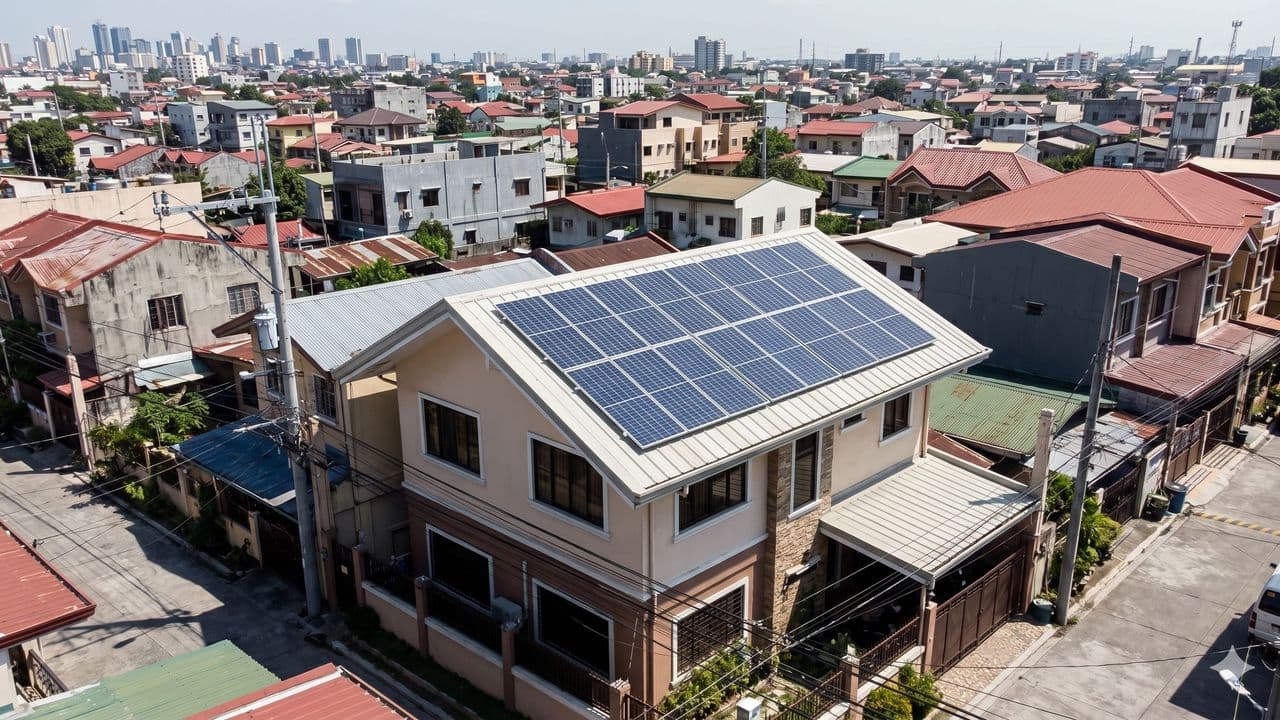
When your Meralco bill arrives, the total at the bottom can easily force a double-take. Residential electricity rates in Metro Manila have climbed well into the double digits per kWh, and Meralco's monthly residential rate advisories regularly post upward adjustments from one billing cycle to the next. (For the current rate, check Meralco's most recent residential rate advisory directly.)
This is not a temporary seasonal spike. Executive Order No. 110, Series of 2026, signed by President Ferdinand Marcos Jr., declared a state of national energy emergency. The order directly cited escalating tensions in the Middle East threatening global oil shipments. Because the Philippines remains a heavy net importer of the petroleum products used for power generation, international supply chain vulnerabilities translate immediately into higher household bills.
At rates in this range, powering standard household appliances has become a heavy financial burden. Choosing the right solar configuration is your primary defense against these climbing baseline expenses. Selecting the wrong setup could mean tying up capital in a substantial battery bank you might never utilize, or suffering through local electric cooperative interruptions because you assumed basic rooftop panels would keep your lights on.
What are the types of solar systems in the Philippines?
The three types of solar systems in the Philippines are grid-tied (on-grid), off-grid, and hybrid. Grid-tied systems connect to the utility grid and earn net metering credits. Off-grid setups run entirely on batteries in remote locations. Hybrid systems combine grid connections with battery backup for uninterrupted power during brownouts.
1. Grid-Tied (On-Grid) Solar System
A grid-tied solar system integrates your rooftop panels directly with your local utility network, whether you are serviced by Meralco, VECO, DLPC, or a provincial electric cooperative. During daylight hours, the solar array captures sunlight and generates electricity to power your active household appliances in real time. Any surplus power your property produces but does not consume flows outward, back into the utility grid.
This outward flow activates net metering, a statutory billing mechanism established under Republic Act No. 9513. Under ERC net metering rules, your local distribution utility compensates you for that exported power. A bi-directional meter records exactly how much energy you send out, and the utility applies the value of that energy as direct peso credits against your monthly electricity bill.
Under Executive Order No. 110, Series of 2026, the Department of Energy mandated that net metering applications be processed within 10 working days. This aggressive timeline ensures property owners can start accumulating bill credits rapidly after their physical installation is complete.
When the sun sets or during severe typhoons, your property simply draws power from the utility grid just as it did before you installed solar. Your accumulated daytime export credits then offset the financial cost of that nighttime consumption.
The Real-World Scenario
Consider a family living in Quezon City where both parents work from home. They run two air conditioning units throughout the hottest parts of the day, pushing their monthly Meralco bill past ₱15,000. Because their specific neighborhood rarely experiences daytime brownouts, they do not require battery backup. A pure grid-tied system directly catches their heavy daytime power consumption. It offsets the bulk of their usage while seamlessly exporting the rest to the grid for utility credits.
Cost and Financial Returns
Because a grid-tied system lacks physical storage batteries, it is the most affordable configuration to install. As an illustrative range based on general market estimates reported across the local solar industry, a residential grid-tied system tends to sit between ₱40,000 and ₱60,000 per kWp. (Always request live quotes from local installers, as component pricing fluctuates with foreign exchange and import conditions.)
A standard 5 kWp setup, built to neutralize an ₱8,000 to ₱10,000 monthly bill, requires an upfront investment in the ₱160,000 to ₱300,000 range fully installed. Calculated against representative residential rates published in recent Meralco advisories, a typical urban household often sees a return on investment within 4 to 6 years.
Pros
- Most accessible upfront cost of all three system types.
- Generates continuous financial returns through utility bill credits.
- Zero maintenance required for bulky battery components.
Cons
- Powers down entirely during a grid brownout to ensure line-worker safety.
- Financial benefits depend partly on your specific distribution utility's export pricing.
2. Off-Grid Solar System
An off-grid solar system operates in total isolation from local utility networks. The solar panels generate power to run the property during the day while simultaneously charging a large bank of deep-cycle or lithium-ion batteries. When the sun goes down, the property relies entirely on that stored battery power to make it through the night.
These standalone systems demand precise engineering and heavy hardware investments. The solar array must be intentionally oversized. It needs the generation capacity to fully charge the battery bank even during the shortened, overcast daylight hours typical of the Philippine monsoon season. Undersizing the panels or the storage reserves results in a total power failure.
Because there is no external utility grid to fall back on, the battery bank must be substantial enough to sustain the property through consecutive cloudy days. This storage requirement makes off-grid the most complex and specialized hardware configuration available.
The Real-World Scenario
Imagine a boutique dive resort operating in an isolated coastal town in Palawan. The local grid connection is non-existent, forcing the owners to run diesel generators round the clock. According to rural electrification reports by Eco-Business, remote diesel generation costs often exceed ₱25 per kWh. By installing a robust off-grid solar and battery system, the resort eliminates generator noise, bypasses the logistical headache of importing fuel, and removes the crippling daily expense of burning diesel.
Cost and Financial Returns
The heavy reliance on industrial-grade energy storage dictates the premium price. Based on general market estimates for 2026, a 5 kWp off-grid system costs between ₱320,000 and ₱450,000. For commercial properties like island resorts or large agricultural facilities, setups routinely exceed ₱800,000 depending on the battery chemistry and total storage capacity required.
Pros
- Total energy independence from external providers and grid failures.
- Complete immunity to current Meralco rates and any future hikes.
- Often the only viable modernization strategy for properties lacking utility infrastructure.
Cons
- The highest upfront capital requirement due to the extensive battery bank.
- Battery components will require replacement every 10 to 15 years, adding long-term maintenance costs.
- Ineligible for net metering since no grid connection exists.
3. Hybrid Solar System
A hybrid solar system merges the financial benefits of a grid connection with the security of dedicated battery storage. Your property remains connected to the local distribution utility, but you also maintain a specialized battery bank on site.
During normal daytime operation, the solar panels power your household appliances and charge your batteries. Once the batteries hit full capacity, the hybrid inverter directs any remaining surplus power outward to the grid. This allows you to earn utility credits, taking full advantage of the mandated 10 working day processing window for net metering applications.
When a rotational brownout or unexpected grid failure occurs, the hybrid inverter detects the outage and shifts the property to battery power automatically. This seamless transition allows essential appliances to continue running without interruption.
The Real-World Scenario
Picture a bustling sari-sari store and adjoining small pharmacy located in a brownout-prone municipality in Bulacan. When the local electric cooperative drops power unannounced, the medicine refrigerators must stay cold, and the point-of-sale systems must remain online. A hybrid system detects the outage and takes over seamlessly, preventing spoiled inventory and preserving the day's revenue stream.
Cost and Financial Returns
Pricing for this tier sits squarely between standard grid-tied and pure off-grid configurations. Current general market data places a typical 5 kWp hybrid system with standard lithium battery backup at roughly ₱250,000 to ₱320,000.
While the initial capital outlay is higher than a grid-tied setup, businesses and remote workers in areas with unstable power often recoup the premium quickly. Avoiding just a few days of lost operational revenue or ruined groceries per month accelerates the return on investment significantly.
Pros
- Uninterrupted power during grid failures and rotational brownouts.
- Fully eligible to earn bill credits through net metering.
- Protects sensitive electronics and appliances from sudden power fluctuations.
Cons
- Higher initial capital outlay than a standard grid-tied system.
- Battery components will require replacement every 10 to 15 years.
System Comparison Breakdown
Choosing the Right Setup for Your Property
Making the final decision requires a practical assessment of your location, your budget, and your local infrastructure.
Assess your local grid stability first. If you reside in Metro Manila, Cebu City, Iloilo, or areas with highly reliable distribution utilities, a grid-tied system delivers the cleanest and fastest return on investment. You avoid the premium costs of battery maintenance while still slashing your monthly bill.
Evaluate your local brownout frequency. If your province experiences grid interruptions weekly, a hybrid system protects your productivity and peace of mind. For commercial spaces and remote workers, that automatic backup power translates directly into saved income.
Your current monthly utility expense dictates the speed of your financial return. Given the high baseline reflected in recent Meralco residential rate advisories, households with heavy air conditioning usage will see rapid payback timelines. According to energy sector reporting by Rappler, historical retail electricity rates have consistently climbed over the decade, meaning the financial gap between generating your own power and buying it from the grid widens every year.
Navigating the National Energy Emergency
The Philippine energy landscape is operating under intense structural pressure. The government's declaration of a national energy emergency via Executive Order No. 110, Series of 2026, signals a clear shift in how households must approach their daily power consumption. The country's heavy reliance on imported fossil fuels exposes consumers to unavoidable price volatility that no amount of household budgeting can fix.
Regulators are actively working to remove administrative barriers to private renewable generation. Recognizing that slow utility approvals cost consumers real money, the mandated 10 working day processing window for net metering applications ensures a rapid transition for new solar owners.
Transitioning to rooftop solar is a definitive step toward shielding your property from these national grid vulnerabilities. It replaces an unpredictable monthly liability with a fixed, reliable energy asset.
Frequently Asked Questions
Which type of solar system is best for Philippine homes in 2026?
For most urban properties with reliable power lines, a grid-tied system remains the most practical choice. It costs the least to install and takes full advantage of the updated ERC net metering rules and the mandated 10 working day processing window to rapidly lower your monthly bills.
What appliances are you planning on connecting to your future solar setup? calculate your load here.
Learn how solar panel systems work here.
Is there a specific roof direction I need to worry about? the answer is here.
How much does a hybrid solar system cost in the Philippines in 2026?
Based on general market estimates for 2026, a standard 5 kWp hybrid system ranges from ₱250,000 to ₱320,000. Final pricing fluctuates based on the specific brand of the hybrid inverter and the total capacity of the lithium battery bank chosen.
Can I still apply for net metering in the Philippines in 2026?
Yes, and the process is faster than in previous years. Distribution utilities are now held to the mandated 10 working day processing window, which significantly reduces the waiting time between system installation and earning bill credits.
Here is our guide for net-metering.
What happens to a grid-tied system during a brownout?
A grid-tied system automatically shuts down during a brownout. This prevents electricity from flowing back into the inactive grid and injuring line workers making repairs. If you need your appliances to stay on during neighborhood outages, a hybrid system with battery backup is the required solution.
How long does a solar system last in the Philippines?
Standard tier-one solar panels degrade slowly and typically carry a 25-year performance warranty. The active electrical components, specifically hybrid inverters and lithium battery banks, will require replacement every 10 to 15 years depending on local usage cycles and ambient temperatures.
Is solar still a good investment given the current energy crisis?
Yes. Under Executive Order No. 110, Series of 2026, grid power costs remain heavily exposed to global fuel shortages, and recent Meralco residential rate advisories continue to highlight this volatility. Locking in your energy costs through owned solar generation provides a long-term financial defense against continuously rising retail rates.
Get your free solar estimate at Solar Scout Philippines here
Sources
- Meralco April 2026 Residential Rate Advisory
- Executive Order No. 110 (Official Gazette)
- Republic Act No. 9513
- Updated ERC Net Metering Rules
- Eco-Business (Reporting on Philippine solar market trends)
- Rappler (Reporting on Philippine energy and historical electricity rates)
Related:
Solar ROI Calculator
East? Southwest? Does my roof need to face a specific direction for better charging?
How Solar Works in the Philippines: From Sunlight to Savings
Stay updated on PH solar
Get new guides, updated cost data, and free tool alerts - straight to your inbox.
Already ready to compare installers?
We use the details you submit only to follow up with installer options. See our Privacy Policy.