
The Next Panel on Your Roof Won't Be Silicon
Wait? what? was it silicon all along?
Published April 20, 2026
The Next Panel on Your Roof Won't Be Silicon
Perovskite Solar Cells: High-Efficiency, Low-Cost Future Modules and Why They Matter Right Now
Solar Scout PH | Feature Article
What You've Been Staring at All Along
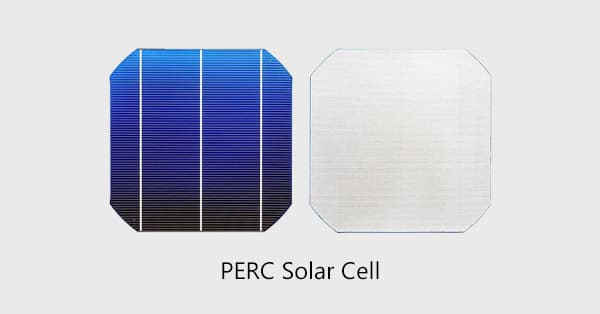
That dark blue panel bolted to your neighbor's roof, specially those which have been there since 2018, runs on crystalline silicon (c-Si). Yes, that silicon, the second most abundant element in the Earth's crust. That's what solar panels were initially composed of. Manufacturers have spent decades squeezing more performance out of it, and a standard residential module today converts roughly 20–22% of sunlight into electricity (Ossila, 2025). That is genuinely impressive for a mature technology.
But silicon has a problem. Its theoretical ceiling —the maximum efficiency a single-junction silicon cell can ever physically reach, known as the Shockley-Queisser (S-Q) limit— sits at approximately 29% (Fluxim, 2026). The S-Q limit, named after physicists William Shockley and Hans Queisser, describes the maximum fraction of sunlight energy a single-material solar cell can convert before thermodynamic losses make further improvement impossible. The industry's best silicon cells today already sit at 27.6% (Ossila, 2025). That gap between 27.6% and 29% is not a wide runway anymore. Now that's a wall.
However, Perovskite solar cells (PSCs) do not hit that wall. Not. Even. Close.
First: What Is Perovskite, Actually
People hear "perovskite" and assume it's some exotic, rare compound mined from a single mountain in Kazakhstan. Well, it's not. Perovskite is a crystal structure. Specifically, it describes any material that arranges its atoms in the same geometric pattern as calcium titanate (CaTiO₃), a mineral first described by the German mineralogist Gustav Rose in 1839 and named after Russian mineralogist Lev Perovski (American Ceramic Society, 2025). The chemical formula for this structure is ABX₃; where A and B are positively charged ions or cations and X is a negatively charged ion or an anion (if you've clicked the article by the title, you probably know what ions are, if not, then, congratulations! now you know!) usually a halide like iodine or bromine).
In solar cells, the most studied perovskite absorber layer uses a compound called methylammonium lead iodide, written as CH₃NH₃PbI₃ or abbreviated as MAPI. The A-site holds a methylammonium (CH₃NH₃⁺) organic molecule, B holds lead (Pb²⁺), and X holds iodide (I⁻). This specific arrangement produces a material that absorbs sunlight with extraordinary efficiency and, critically, it can be manufactured without the brutal, energy-guzzling processes that silicon demands.
Before comparing, it helps to understand what silicon manufacturing actually involves first. Building a silicon solar cell starts with extracting silicon dioxide (SiO₂, or just sand) and purifying it into polysilicon, this process runs at temperatures exceeding 1,400°C. Then manufacturers slice the purified silicon into wafers, roughly 180 micrometres thin, and process each one through a sequence of doping steps that introduce phosphorus and boron into the crystal lattice to create the p-n junction. The whole operation demands significant capital: a utility-scale silicon module manufacturing line in China sits at around USD $154 per kilowatt of production capacity at present, though forecasters expect this to fall further by 2030 (PV Europe, 2025).
Chinese manufacturing scale drove the price of a silicon module from USD $2.11 per watt in 2009 to as low as USD $0.20 per watt by 2024; a roughly 90% cost reduction in fifteen years (IEEE Spectrum, 2025). That is a breathtaking industrial achievement. It also means that anyone trying to displace silicon with something new must compete against a technology with massive economies of scale and a deeply entrenched supply chain.
Perovskite, well, is just built different, well, of course literally and well, arithmetically, let me explain:
A perovskite solar cell is a thin-film device. "Thin-film" means the light-absorbing layer measures in nanometres (nm), not hundreds of micrometres like a silicon wafer. A typical perovskite absorber layer sits at around 300–600 nm thick, about one-thousandth the thickness of a human hair.
The structure of a PSC stacks several functional layers on top of each other. Working from the light-receiving surface downward: a transparent conducting electrode (usually indium tin oxide, or ITO), an electron transport layer (ETL a material that draws electrons out of the perovskite toward the circuit), the perovskite absorber itself, a hole transport layer (HTL which does the same job in the opposite direction, extracting the positively charged "holes" left behind when electrons move), and a back metal electrode.
When sunlight hits the perovskite layer, photons excite electrons across the material's bandgap the energy gap between the valence band and the conduction band (where they move freely and generate current). Perovskites have a tunable bandgap. By swapping the composition of the ABX₃ formula changing the halide from iodide to bromide, for instance, or replacing the methylammonium with formamidinium (FA⁺) researchers can dial the bandgap up or down to absorb different portions of the solar spectrum. Silicon cannot do this. Its bandgap locks at 1.1 electron volts (eV).
The Power Conversion Efficiency (PCE, expressed as a percentage) measures how much incoming solar energy a cell converts to electricity. It is the headline number everyone quotes when ranking solar technologies.
This comparison targets a realistic homeowner or energy developer deciding between what sits on shelves today versus what the next procurement cycle might offer.
Efficiency: Commercial silicon modules sit at 20–22%. The best silicon laboratory cell reaches 27.6%. Commercial perovskite-silicon tandem modules from Oxford PV ship at 24.5% today; LONGi's certified tandem record stands at 34.85% in 2025. Single-junction perovskite in the laboratory: 26.7%. Silicon leads in commercial deployment; perovskite leads in raw performance potential (Ossila, 2025; LONGi, 2025; American Ceramic Society, 2025).
Manufacturing cost: Silicon modules at commercial scale cost as little as USD $0.10–$0.20/watt. Current perovskite module manufacturing costs run approximately USD $0.57/watt. Projected perovskite costs at scale: USD $0.18/watt (Nano-Micro Letters, 2025; ACS Energy Letters, 2022).
Stability and lifespan: Silicon: 25–30 year warranties, extensively validated. Perovskite: outdoor performance loss of 7–8%/month in current test modules; best-case laboratory tests show cells maintaining 78% efficiency after one year (American Ceramic Society, 2025).
Manufacturing complexity: Silicon requires high-temperature vacuum processes and expensive cleanroom infrastructure. Perovskite uses solution-based deposition at low temperatures, compatible with roll-to-roll printing (GreenLancer, 2026; IEEE Spectrum, 2025).
Flexibility: Perovskite cells coat onto flexible substrates — plastic, metal foil, curved surfaces. A certified flexible perovskite-silicon tandem cell already reached 33.6% PCE with 91% efficiency retention after 5,000 bending cycles (Nature, 2025). Silicon wafers break.
Toxicity: Silicon: no significant toxicity concerns in operation. Perovskite: lead content in most high-performance formulations requires careful encapsulation and end-of-life management (PMC, 2023b).
Solar energy capacity measures in gigawatts (GW) — one gigawatt equals one billion watts, enough to power roughly 750,000 average Philippine homes. The global solar industry installed over 600 GW in new capacity in 2024 alone (Nano-Micro Letters, 2025). Nearly all of that came from silicon.
Perovskite currently operates at pilot and early commercial scale. Over 100 perovskite companies now operate in China, with several announcing 100 MW (megawatt) annual manufacturing lines — a scale that represents about one-tenth the output of a single major silicon factory (Nano-Micro Letters, 2025). Oxford PV's first commercial shipment went out in 2024. Industry analysts at Rethink Energy project that by 2040, silicon-perovskite tandems will hold 61% of the global solar module market (PV Europe, 2025).
That number tells you where the industry thinks this is going. Silicon and perovskite are not competitors in the sense that one destroys the other. They combine. The most commercially viable near-term path for perovskite runs through silicon layering a perovskite top cell onto an existing silicon bottom cell, boosting total output without rebuilding the silicon manufacturing base from scratch. A contractor retrofitting a factory roof in Cavite with a 2030-era tandem module might get 30% efficiency from a panel that physically looks identical to what goes up today, but generates significantly more kilowatt-hours per square metre.
That per-square-metre argument matters enormously in dense urban environments where roof space is finite. Rooftop solar in Metro Manila does not have the luxury of sprawling across wide open land. Every efficiency percentage point converts directly to more electricity from the same footprint.
Solar energy capacity measures in gigawatts (GW) one gigawatt equals one billion watts, enough to power roughly 750,000 average Philippine homes. The global solar industry installed over 600 GW in new capacity in 2024 alone (Nano-Micro Letters, 2025). Nearly all of that came from silicon.
Perovskite currently operates at pilot and early commercial scale. Over 100 perovskite companies now operate in China, with several announcing 100 MW (megawatt) annual manufacturing lines — a scale that represents about one-tenth the output of a single major silicon factory (Nano-Micro Letters, 2025). Oxford PV's first commercial shipment went out in 2024. Industry analysts at Rethink Energy project that by 2040, silicon-perovskite tandems will hold 61% of the global solar module market (PV Europe, 2025).
That number tells you where the industry thinks this is going. Silicon and perovskite are not competitors in the sense that one destroys the other. They combine. The most commercially viable near-term path for perovskite runs through silicon layering a perovskite top cell onto an existing silicon bottom cell, boosting total output without rebuilding the silicon manufacturing base from scratch. A contractor retrofitting a factory roof in Cavite with a 2030-era tandem module might get 30% efficiency from a panel that physically looks identical to what goes up today, but generates significantly more kilowatt-hours per square metre.
That per-square-metre argument matters enormously in dense urban environments where roof space is finite. Rooftop solar in Metro Manila does not have the luxury of sprawling across wide open land. Every efficiency percentage point converts directly to more electricity from the same footprint.
Perovskite solar cells deliver laboratory efficiencies that already rival silicon, and tandem configurations that surpass anything single-junction silicon can achieve. The theoretical maximum for silicon-perovskite tandems at 43% sits well above silicon's 29% ceiling (LONGi, 2025; American Ceramic Society, 2025). Manufacturing costs will drop substantially at scale, and the deposition processes are intrinsically cheaper than silicon's thermal demands. The science moves at a pace that consistently outruns projections.
The durability gap and the lead question are real obstacles not disqualifying ones, but problems that demand continued engineering effort and honest regulatory attention. The field does not pretend otherwise. Outdoor stability data from the University of Surrey and others feeds directly into encapsulation improvements and material substitution research. Those 1,530-hour alumina-enhanced cells represent a tenfold jump in tested lifespan; further improvements stack on top of that.
Perovskite solar cells will not replace the silicon panel on your neighbour's roof this year. But the next generation of that panel, the one your neighbour buys in 2030 or 2035, will almost certainly carry perovskite in it.
American Ceramic Society (2025) Perovskite solar cells: Progress continues in efficiency, durability, and commercialization. The American Ceramic Society, 18 March. Available at: https://ceramics.org/ceramic-tech-today/perovskite-solar-cells-progress-2025/ (Accessed: 20 April 2026).
ACS Energy Letters (2022) 'Design and cost analysis of 100 MW perovskite solar panel manufacturing process in different locations', ACS Energy Letters. Available at: https://pubs.acs.org/doi/10.1021/acsenergylett.2c01728 (Accessed: 20 April 2026).
Fluxim (2026) Highest perovskite solar cell efficiencies (2026 update). Fluxim AG, 5 February. Available at: https://www.fluxim.com/research-blogs/perovskite-silicon-tandem-pv-record-updates (Accessed: 20 April 2026).
GreenLancer (2026) Perovskite solar cells vs. silicon: Working principle and cost. GreenLancer, 13 January. Available at: https://www.greenlancer.com/post/perovskite-solar-cells (Accessed: 20 April 2026).
IEEE Spectrum (2025) 'Could perovskite solar cells start competing with traditional silicon solar amidst new tariffs?' IEEE Spectrum, 7 May. Available at: https://spectrum.ieee.org/perovskite-solar-cells-costs-and-tariffs (Accessed: 20 April 2026).
IJRIAS (2025) 'The promise of lead-free perovskites: Can they replace toxic alternatives in solar cells and lead the future?' International Journal of Research and Innovation in Applied Science. Available at: https://rsisinternational.org/journals/ijrias/articles/the-promise-of-lead-free-perovskites-can-they-replace-toxic-alternatives-in-solar-cells-and-lead-the-future/ (Accessed: 20 April 2026).
Lin, X., Su, H., Shen, X., Qin, Z. and Chen, M. et al. (2025) 'Key advancements and emerging trends of perovskite solar cells in 2024–2025', Nano-Micro Letters. Available at: https://pmc.ncbi.nlm.nih.gov/articles/PMC12804561/ (Accessed: 20 April 2026).
Liu, D., Shao, Z. and Li, C. (2025) 'Inhibition of lead toxicity of perovskite solar cells', Advanced Energy Materials. doi: 10.1002/aenm.202505840.
LONGi Solar (2025) 34.85%! LONGi breaks world record for crystalline silicon-perovskite tandem solar cell efficiency again. LONGi Green Energy Technology, 15 April. Available at: https://www.longi.com/en/news/silicon-perovskite-tandem-solar-cells-new-world-efficiency/ (Accessed: 20 April 2026).
Nano-Micro Letters (2025) 'Cost effectivities analysis of perovskite solar cells: Will it outperform crystalline silicon ones?' Nano-Micro Letters. doi: 10.1007/s40820-025-01744-x.
Nature (2025) 'Flexible perovskite/silicon tandem solar cells with 33.6% efficiency', Nature, 10 November. doi: 10.1038/s41586-025-09849-4.
Ossila (2025) Highest efficiency perovskite solar cells. Ossila Ltd. Available at: https://www.ossila.com/pages/highest-efficiency-perovskite-solar-cells (Accessed: 20 April 2026).
PMC (2023a) 'The levelized cost of electricity from perovskite photovoltaics', PMC / Energy & Environmental Science. Available at: https://pmc.ncbi.nlm.nih.gov/articles/PMC9932852/ (Accessed: 20 April 2026).
PMC (2023b) 'Environmental and health risks of perovskite solar modules: Case for better test standards and risk mitigation solutions', PMC. Available at: https://pmc.ncbi.nlm.nih.gov/articles/PMC9860350/ (Accessed: 20 April 2026).
PV Europe (2025) New report Rethink Energy — The cost and efficiency screw for PV modules continues to turn. PV Europe, 17 February. Available at: https://www.pveurope.eu/solar-modules/new-report-rethink-energy-cost-and-efficiency-screw-pv-modules-continues-turn (Accessed: 20 April 2026).
ScienceDaily (2025) 'Scientists crack the code to longer-lasting perovskite solar technology'. ScienceDaily. Available at: https://www.sciencedaily.com/releases/2025/02/250227125758.htm (Accessed: 20 April 2026).
Suo, Y., Wang, L. and Chen, K. (2025) 'Sustainable approaches to address lead toxicity in halide perovskite solar cells: A review of lead encapsulation and recycling solutions', EcoMat. doi: 10.1002/eom2.12511.
Stay updated on PH solar
Get new guides, updated cost data, and free tool alerts - straight to your inbox.
Already ready to compare installers?
We use the details you submit only to follow up with installer options. See our Privacy Policy.